In 2009, when AI was not yet our “trustful companion” in writing papers, I completed my master’s dissertation at the Bucharest University of Economic Studies, Faculty of Marketing, titled Personal Branding (Radu, O.R., 2009, Branding Personal, ASE Bucharest, scientific coordinator: Lect. Univ. Dr. Mihai Orzan). Looking back, many of the insights remain strikingly relevant in 2025, perhaps even more so, given how leadership now plays out in digital and global contexts.
One of the central ideas I emphasized then is that personal branding is not just about image, but about value and credibility. As I wrote in the paper:
“Personal branding is not only image, as it is often practiced today. It represents an image based on value… Image is not form without content, but an attractive garment for value.”
This is why the conversation about personal branding is inseparable from leadership.
Personal Branding Meets Leadership
Personal branding asks us to think about how we are seen, trusted, and remembered. Leadership is about how we inspire, guide, and influence others. The two are deeply interconnected:
-
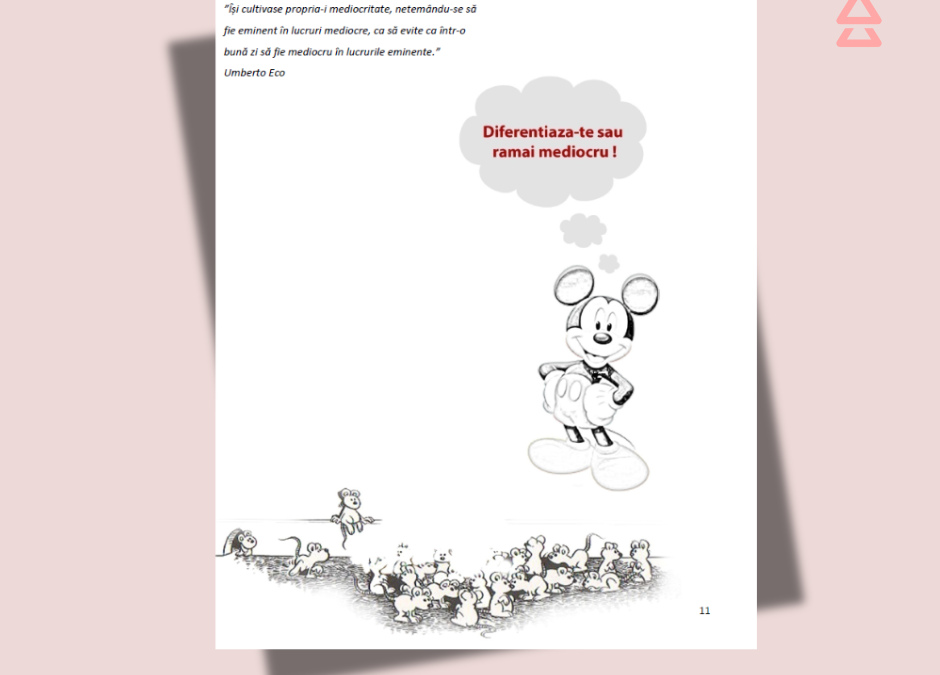
Differentiate or remain mediocre. In my dissertation, I reflected on the principle captured by Jack Trout:
“Differentiate or die.”
In leadership, differentiation means having a clear vision and unique style that makes people listen and follow. Without it, even talented professionals risk blending into the background. -
Credibility is earned through consistency. Dale Carnegie observed that we are judged by what we do, how we look, what we say, and how we say it. My own research stressed:
“Credibility is very difficult to gain and very easy to lose.”
Leaders today must show congruence between words and actions, especially in a world where transparency is amplified by social media. -
Leadership as coaching. Already in 2009, I underlined the duality of egoism and altruism in leadership:
“The best way to show you are a person of character is to admit you have made a mistake. People appreciate the courage of admitting imperfection and feel more at ease.”
Coaching others is both a service to them and a discipline for oneself. -
From brand to “lovemark.” Inspired by Kevin Roberts, I argued:
“A personal lovemark transcends reason, being deeply anchored in emotion.”
Leaders who become “lovemarks” do not just command authority, they inspire trust, affection, and loyalty.
What Has Changed Since 2009
In 2009, personal branding was mostly about reputation in face-to-face interactions, the occasional media presence, and perhaps a personal blog. Social media was still in its early days, and the concept of a “digital footprint” was barely forming. Fast forward to 2025, and the entire landscape has shifted: leaders are constantly visible through LinkedIn posts, online interviews, podcasts, or even AI-generated profiles. A personal brand can be amplified or destroyed within hours. What once took years to build through reputation and word-of-mouth can now be shaped, challenged, or reinforced daily in the digital sphere. This new reality makes authenticity, humility, and service more critical than ever.
Branding, Leading by Example, and Humility
If in 2009 personal branding was often described as self-promotion, today it must be reframed as leading by example. Branding without service becomes vanity; service without visibility risks being overlooked. The most authentic leaders show that humility and personal branding can co-exist:
-
Branding is about clarity of values.
-
Leading by example is about living those values daily.
-
Service is about putting others first.
-
Humility is about recognizing limits and learning continuously.
When these dimensions intersect, leadership becomes more than influence, it becomes a legacy.
Today, leadership is performed not only in boardrooms but also online, through LinkedIn posts, podcasts, webinars, and even AI-generated content. A leader’s personal brand is not simply about reputation, it is about responsibility.
A strong personal brand without humility risks being superficial. Leadership without visibility risks being invisible. Together, they create influence that outlives positions and titles.
For those curious about how I was thinking back in 2009, you can read my original dissertation here (in Romanian): PersonalBranding_RaduOanaRoxana_23.02.2009