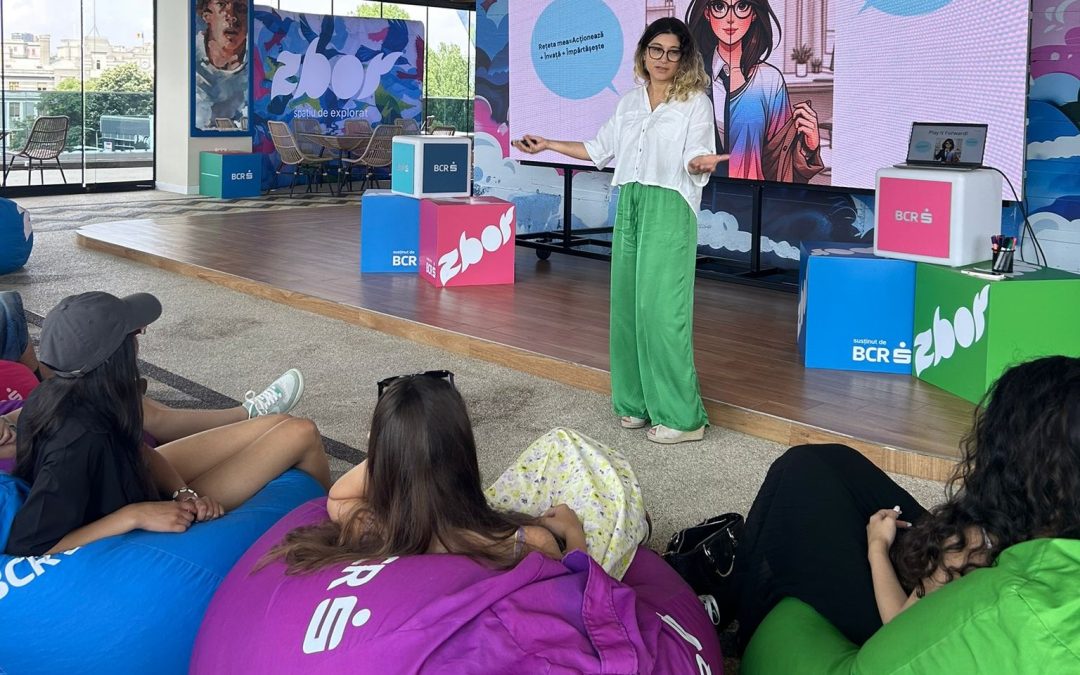
At Zbor Hub, I had the chance to speak with a group that gives me hope for the future, high school students ready to question, imagine, and act. We talked about leadership. But more importantly, we talked about civic responsibility, the everyday choice to care about your community, to speak up when something isn’t right, and to believe that your actions matter.
“Civic responsibility isn’t a rule to follow. It’s a habit you build. A mindset that says: What I do matters.”
This is how I defined civism equation:
CIVISM = Respect + Involvement + Courage + COMMUNITY
You think. You speak. You help. You change.Civism means you care. About people. About your community. About what you leave behind.
Civism means caring about people, your community, and the impact you leave behind. It starts with respect—treating others with dignity, listening to different opinions, and taking care of shared spaces. Then comes involvement—choosing to participate, speak up, and be part of the solution, even in small ways. Courage is also essential. Sometimes, doing the right thing means going against the crowd, standing up for someone, or calling out injustice. And finally, civism is deeply connected to the idea of community. It is not just about individual actions, but about building something better together. When you think critically, express your ideas, offer help, and take initiative, you begin to change your environment. True civic responsibility is not about grand gestures, but about showing up, making conscious choices, and being an active part of the world around you.
Civic responsibility isn’t just for adults. In fact, Gen Z has more tools, more voice, and more power to create change than any generation before. But those tools must be used with purpose.
Civic actions can be small:
-
Helping a classmate who is struggling
-
Improving something in your school
-
Reporting online hate or fake news
-
Volunteering
-
Speaking up for someone excluded
-
Using tech to solve local problems
You don’t have to fix everything. You just have to start somewhere.
I also shared how digital tools, like gen AI platforms, can help society when they are built with care, ethics, and empathy. But remember: technology only works well when people use it with good values. That’s why civic responsibility matters, even in the digital world. Good tech must include people, protect rights, and serve the common good.
Play it forward!