
Research consistently shows that empathetic leadership creates stronger organizational performance and employee engagement, yet many leaders struggle to translate understanding into meaningful action. The answer may lie in an ancient Japanese concept that’s more relevant today than ever.
What Is Kyokan?
In Japanese, the word kyokan (共感) means “sharing feelings” or “feeling together.” Many people translate it simply as empathy, but this captures only half its true meaning.
Kyokan is empathy that moves into action. It is understanding how someone feels, standing beside them in that feeling, and then doing something meaningful to help or support them. While Western concepts of empathy often stop at understanding and sympathy, kyokan demands responsive action.
This distinction matters profoundly in leadership. Research confirms that while empathetic understanding creates connection, it’s the action component that “positively transforms organizational culture and performance” and creates “heightened levels of employee engagement” (Westover, 2024). Leaders who demonstrate kyokan don’t just feel with their people, they act on those feelings in ways that create real change.
In Japanese culture, kyokan appears across many domains, from science and education to art and design, but at its heart, it represents human connection that transcends passive understanding. It builds trust, respect, and mutual understanding through demonstrated care, not just expressed concern.
My First Experience with Kyokan
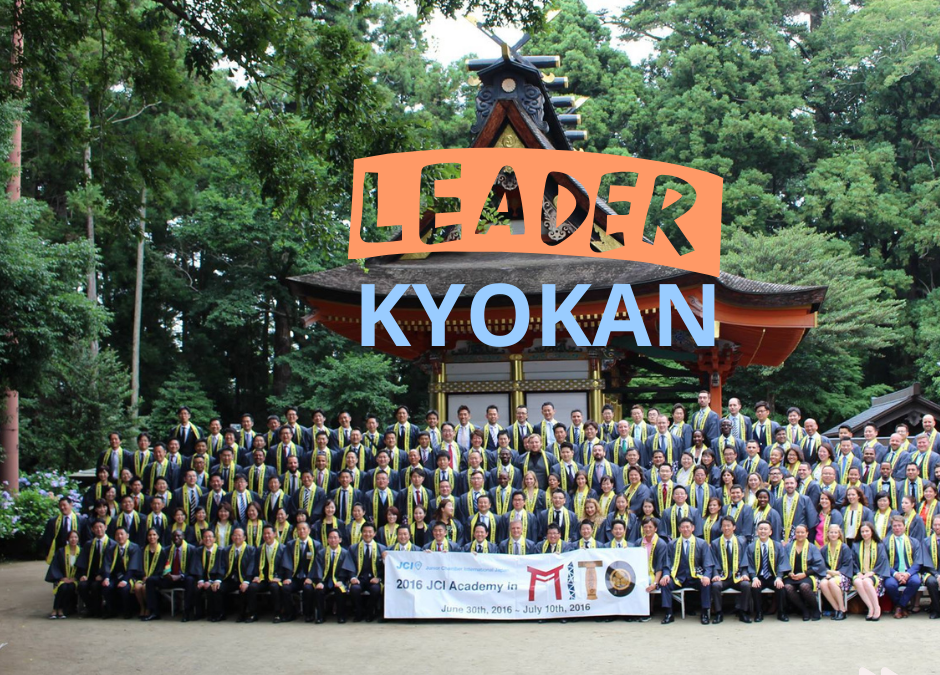
In 2016, I was selected to attend the JCI Leadership Academy in Mito, Japan, an intensive 11-day leadership immersion program bringing together participants from almost 100 countries. Our head trainer was Lars Hajslund, a respected international leadership developer known for his unique ability to connect people across vast cultural divides.
Under his guidance, we didn’t just discuss kyokan, we lived it. Every day presented challenges that could only be solved through deep listening, genuinely respecting our differences, and taking collective action based on what we learned about each other. We shared meals, stories, laughter, and sometimes tears, discovering that true leadership emerges not from position or authority but from authentic human connection translated into meaningful action.
That experience fundamentally transformed my understanding of leadership. I realized that real leadership isn’t about having the right title, it’s about feeling together and acting together. From that moment, I knew with certainty: the world desperately needs more Kyokan Leaders.
What Is a Kyokan Leader?
A Kyokan Leader differs fundamentally from both traditional authoritative leaders and purely empathetic ones. Research shows that while empathetic leaders “enhance mutual communication and generate mutual trust between the leader and the follower” (Thomas, 2024), Kyokan Leaders go further by consistently translating that understanding into meaningful, culturally-aware action.
A Kyokan Leader is someone who:
Feels what others feel, and takes action to make a difference
- Not just: “I understand you’re stressed about the deadline.”
- But: “I understand you’re stressed about the deadline. Let me restructure the timeline and provide additional resources so you can succeed without burning out.”
Shares both success and failure with the team, never alone
- Not just: Taking credit when things go well, blame when they don’t.
- But: “We achieved this together” when celebrating, and “I take responsibility for not setting us up for success” when facing setbacks.
Builds bridges between people, even when they seem far apart
- Not just: Acknowledging that team members disagree.
- But: Facilitating deep understanding between conflicting parties by finding common ground and creating shared goals that honor different perspectives.
Acts with courage, but never without kindness
- Not just: Making tough decisions quickly.
- But: Making difficult decisions with transparency and compassion, taking time to explain the ‘why’ and providing support for those affected.
A Kyokan Leader is never passive. They are intensely active, but their actions are always guided by deep care, genuine respect, and profound humanity. They understand that leadership is not something you do to people, but something you do with people.
Why Kyokan Leadership Matters Now
Current research reveals a critical gap in leadership effectiveness that kyokan directly addresses. While studies consistently show that “leaders who seek to develop and strongly exhibit empathy gain more trust from followers, and followers, in return, offer better results” (Rasmussen, 2020), many organizations struggle with leaders who either understand but fail to act, or act without truly understanding the human impact of their decisions.
The Modern Leadership Challenge:
- Global teams require leaders with cross-cultural emotional intelligence who can understand and respond appropriately across different cultural contexts
- Remote and hybrid work demands more intentional connection and support, not just virtual check-ins
- Rapid technological change requires leaders who can both understand human impact and respond effectively to help people adapt
- Generational workplace differences need bridge-builders who can translate between different values and communication styles
- Mental health awareness calls for leaders who can recognize distress and take meaningful action to support wellbeing
Kyokan Leadership addresses these challenges by providing a framework that is both culturally intelligent and action-oriented, both globally aware and locally responsive.
Kyokan at Home: Teaching the Next Generation
Kyokan isn’t reserved for corporate boardrooms or international leadership programs, it begins in the smallest moments of daily life. As a mother of a 5-year-old boy, one of my most important missions is teaching him what kyokan means through lived examples that he can understand and practice.
When we listen carefully to someone who’s upset or spend time making a handmade card for a sick friend, these moments teach that simply understanding someone’s need isn’t enough, we must also respond with concrete care and action.
Research supports this developmental approach. Studies show that children who learn empathy combined with prosocial action develop stronger leadership capabilities and emotional intelligence as adults. They become people who naturally move from “I see you’re struggling” to “How can I help?” If we raise children with this mindset, they will carry it into their schools, communities, and eventually their workplaces, creating ripples of compassionate action that can transform entire organizational cultures.
AI, Love, and Kyokan: A Vision for the Future
Mo Gawdat, former Google X executive and author, speaks compellingly about the urgent need to teach artificial intelligence about love and compassion. He envisions a future where AI systems handle our material needs, potentially creating abundance for all humanity, but warns that for this world to be truly beneficial rather than dystopian, AI must learn kindness, compassion, and genuine connection, the same values we most want to see in human leaders.
This vision isn’t science fiction; it’s an emerging reality that current research both validates and complicates. Scientists studying AI emotional intelligence note that “incorporating cultural diversity and biases into training datasets can hinder accuracy and efficiency” in emotion detection systems (Singh et al., 2024). Yet recent breakthrough studies show promising developments, with some AI systems already demonstrating the ability to express compassion in ways that human evaluators perceive as more effective than responses from human experts (Ovsyannikova et al., 2025).
This is exactly where kyokan becomes not just relevant but essential. If we can train AI systems to not only recognize human emotions across cultural contexts but to respond with culturally-aware, action-oriented compassion, we could create technology that truly serves human flourishing rather than simply optimizing for efficiency.
Kyokan provides a crucial framework for this development, teaching AI to move beyond pattern recognition to genuine responsive care that honors cultural differences while taking meaningful action to support human wellbeing.
The Kyokan Leadership Framework in Practice
For Individual Leaders:
- Develop Cultural Emotional Intelligence: Learn to recognize how emotions are expressed differently across cultures, ages, and backgrounds
- Practice Active Response: Move consistently from “I understand how you feel” to “What specific action can I take to help?”
- Share Authentic Vulnerability: Model the courage to be genuinely human while maintaining the strength to lead effectively
- Build Systematic Bridges: Create ongoing processes and systems that connect people, not just one-time interventions
For Organizations:
- Measure Empathy AND Action: Track both understanding and responsive behaviors in leadership assessments and performance reviews
- Create Cross-Cultural Learning: Develop programs that teach different cultural approaches to empathy, support, and collaborative action
- Reward Kyokan Behaviors: Actively recognize and promote leaders who demonstrate consistent empathy-in-action, not just results
- Design Systems for Connection: Build organizational processes that make empathetic action easier, more systematic, and more sustainable
For Communities and Families:
- Model Daily Kyokan: Show children and community members what empathy-in-action looks like in everyday situations
- Create Opportunities for Practice: Design community projects that require both understanding others and taking collaborative action
- Celebrate Responsive Care: Acknowledge when people move beyond sympathy to meaningful support and action
A Call to Action: The World Needs Kyokan Leaders
From my transformative experience learning under Lars Hajslund in Mito to the daily lessons I share with my son, kyokan has served as both my leadership compass and my life guide. It has shown me repeatedly that real, lasting change begins when we choose to connect deeply with others and then act with consistent, thoughtful compassion.
The research is unambiguous: empathetic leadership works, but only when combined with meaningful, sustained action. Kyokan provides a time-tested framework for this integration, drawing from centuries of Japanese wisdom while directly addressing the most pressing challenges of contemporary global leadership.
The stakes couldn’t be higher. As we stand at the intersection of unprecedented technological capability and urgent human needs, we need leaders who can feel deeply across cultural boundaries and act courageously to create positive change. We need leaders who understand that true strength comes not from emotional distance but from emotional connection translated into wise action.
If we teach kyokan to our children, practice it consistently in our communities, and intentionally embed it into the technologies and systems of tomorrow, we can create a world where all leadership, human and artificial, is guided by empathy in action rather than efficiency without heart.
The question isn’t whether we need more empathetic leaders. The research has settled that question definitively. The real question is whether we’re ready to become leaders who feel deeply, understand broadly, and act courageously in service of others.
The world is waiting for more Kyokan Leaders. Will you be one?
References
Ovsyannikova, D., Oldemburgo de Mello, V., & Inzlicht, M. (2025). Third-party evaluators perceive AI as more compassionate than expert humans. Communications Psychology. https://doi.org/10.1038/s44271-024-00182-6
Rasmussen, A. (2020). Empathy: A Case for Selfless Leadership.
Sharma, V., Suyal, M., & Tiwari, T. D. (2024). Exploring Empathy in Management: Compassionate Leadership – The Ratan Tata Way. International Journal of Advanced Research in Science, Communication and Technology. https://doi.org/10.48175/ijarsct-19162
Singh, A., Saxena, R., & Saxena, S. (2024). The Human Touch in the Age of Artificial Intelligence: A Literature Review on the Interplay of Emotional Intelligence and AI. Asian Journal of Current Research. https://doi.org/10.56557/ajocr/2024/v9i48860
Thomas, V. (2024). Understanding compassionate leadership. British Journal of Healthcare Assistants. https://doi.org/10.12968/bjha.2024.18.3.104
Westover, J. (2024). Building the Compassionate Culture: How Empathetic Leadership Breeds Engagement and Performance. https://doi.org/10.70175/hclreview.2020.12.3.10
The Diary of A CEO Podcast: Ex-Google Exec (WARNING): The Next 15 Years Will Be Hell Before We Get To Heaven! – Mo Gawdat https://www.youtube.com/watch?v=S9a1nLw70p0